Choosing granite is partly a design decision and partly a technical one. The stone has to look right in the space, but it also has to suit how the surface will be used, how it will be installed and how it will be shipped. Working through the decision in a fixed order makes it much easier.
1. Start with the application
The same granite can be specified very differently depending on where it goes. Before looking at colours, be clear about the use:
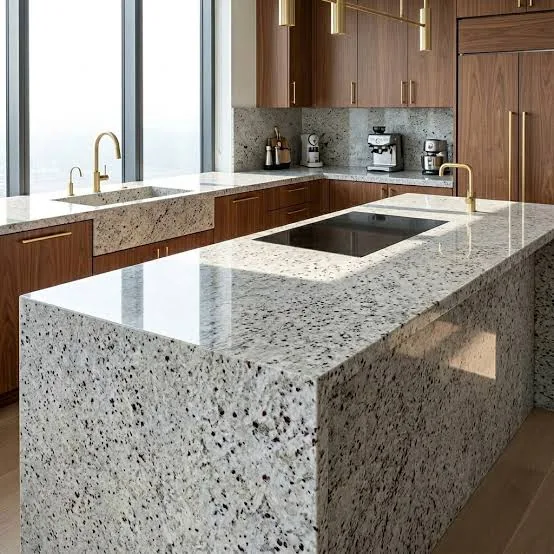
- Kitchen countertops and islands — usually supplied as slabs so that long runs can be cut with few joints.
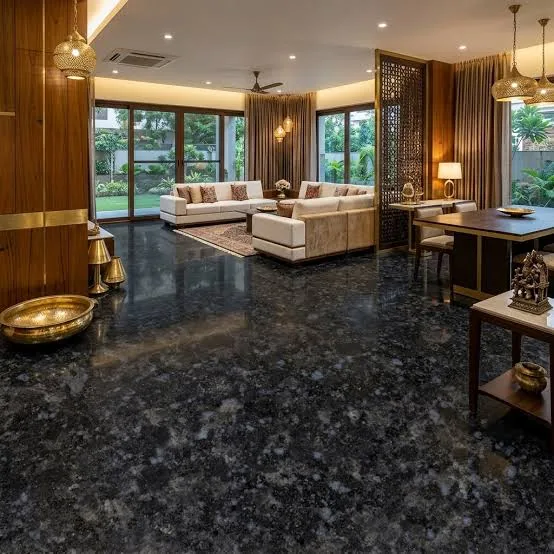
- Flooring and staircases — often tiles or cut-to-size pieces, where slip resistance and wear matter as much as appearance.
- Wall cladding and feature walls — thickness, weight and the fixing system become important.
- Exterior façades and paving — weather exposure and surface texture drive the choice of finish.
- Bathroom vanities and hospitality interiors — a balance of appearance, stain resistance and ease of cleaning.
2. Choose the colour family
Aravali Export works with three core colour families, and each one does a different job in a design.
Red Granite brings warmth and a strong focal point. It pairs well with neutral cabinetry, timber and metal details, and suits projects that want character rather than restraint.
Black Granite creates depth and contrast. It is a common choice for minimalist kitchens, reception areas and luxury hospitality spaces, and it hides everyday wear well.
White Granite makes spaces feel brighter and works with almost any palette. It is a popular alternative to plain manufactured surfaces when a project wants natural texture in a light tone.
3. Accept — and plan for — natural variation
Granite is formed over millions of years, and no two blocks are identical. Colour, grain size, mineral spots and movement can vary from block to block and even within one slab. That variation is part of the value of natural stone, but it needs to be managed:
- Approve representative samples or photographs of actual slabs before production.
- For large projects, ask for material to come from the same block or lot where possible, so the whole area looks consistent.
- Treat website and catalogue photos as a guide to the stone's character, not an exact match.
4. Select the finish
The finish changes how the stone looks and how it performs. A polished surface deepens colour and shows the full pattern; a honed surface is matte and softer; textured finishes such as flamed or leathered add grip and hide marks. Our guide to granite finishes explains each option in detail.
5. Confirm format, size and thickness
Decide whether the project needs slabs, tiles or cut-to-size pieces. Then confirm the dimensions and thickness required by the design and the installer. Thickness affects strength, weight, installation method and freight cost, so it is worth agreeing early with your fabricator or contractor.
6. Think about export logistics early
For international orders, the practical details matter as much as the stone itself: quantity, packing method, destination port, delivery timeline and any documentation your market requires. Sharing these at the enquiry stage avoids surprises later.
Checklist: what to send with your enquiry
- Granite colour or preferred variety (a photo or sample reference helps)
- Application and project type
- Format: slabs, tiles or cut-to-size
- Dimensions and thickness
- Surface finish
- Approximate quantity (m², number of slabs or containers)
- Destination country or port
- Expected timeline
If you are still at the design stage, that is fine — tell us about the project and we can start with the basic material discussion.
Planning a granite project?
Tell us the colour, size, finish, quantity and destination and our team will get back to you.